.png)
Where to Go From Here: A Streambank Restoration Toolbox

Updated: Apr 27
"It feels like my property line is shrinking every time we have a heavy rain."
"The edge of this river is getting so steep and soft that I’m afraid to get the mower anywhere near it."
"I’m worried that if my tree falls, it’s going to take a huge chunk of my yard with it—is that inevitable?"
"I remember when this was just a small jump-over creek; why is it suddenly eating up so much space?"
Are these questions familiar? Is streambank erosion impacting your property? From minor soil loss to significant channel incision and gully formation following storm events, these rapid changes can be alarming. If you’ve wondered why your streambank is changing so fast, you aren't alone.
"70 percent of NC streams are impaired & likely in need of at least some streambank repair.”
--based on a 2020 Water Quality Assessment performed by the North Carolina Division of Water Quality.

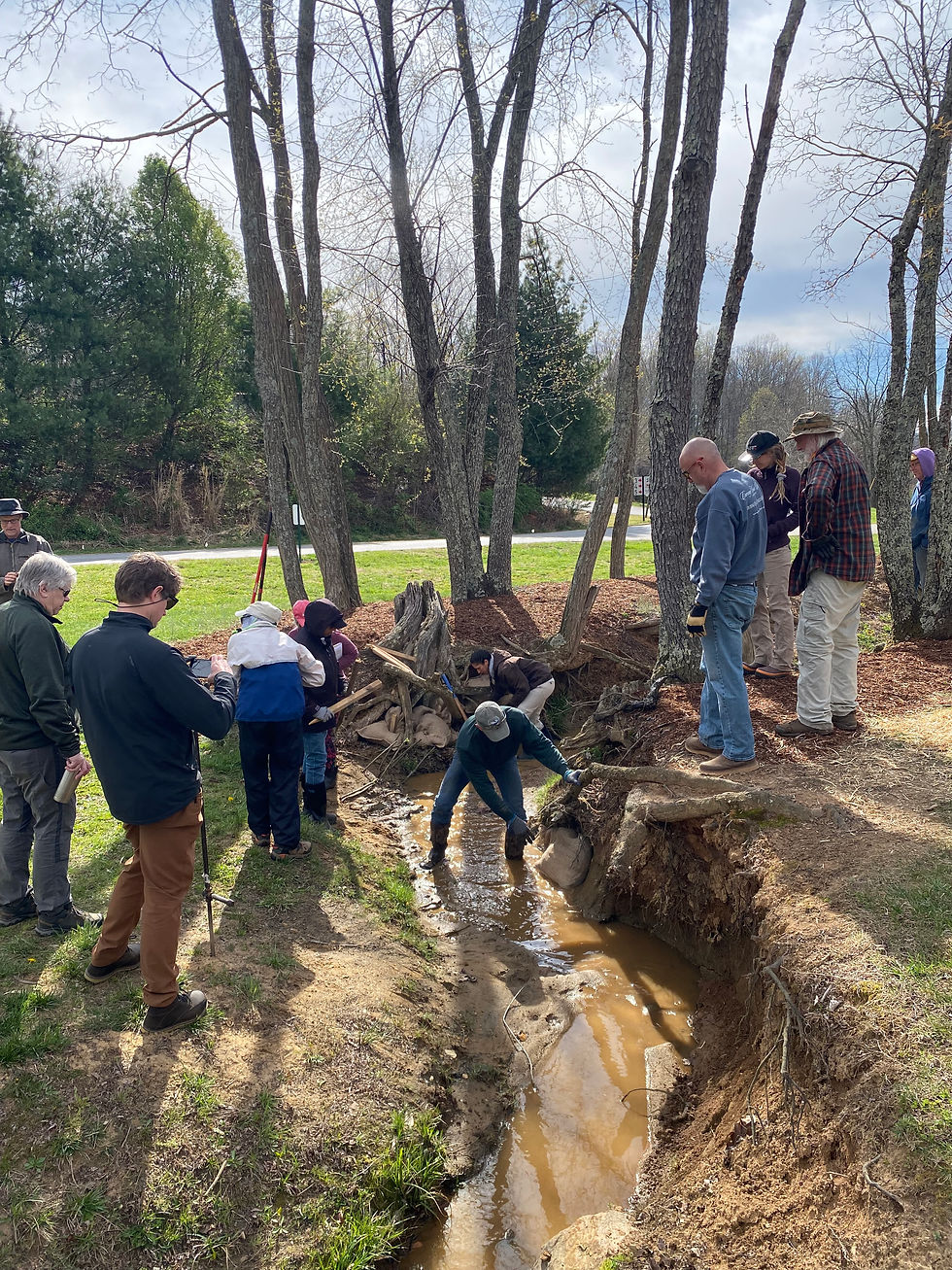
Painters’ employee Stefanie attended the free stream bank repair workshop hosted by NCSU’s Biological and Agricultural Engineering (BAE) Extension this spring to help gather information for coworkers and customers to reference when tackling the daunting efforts of restoring stream banks post-Helene.
While mid-April might be past the optimal window for planting live stakes, if you’re working towards restoring a stream bank, "now" is always the best time to start. And this project is going to take a bit of homework and a bit of learning and a bit of labor.
Start here and start now with these curated resources provided by BAE and a list of best plants found at Painters for transplanting options.
A Starter List of References and Resources
Small-scale Solutions to Eroding Streambanks
From NC Cooperative Extension-North Carolina State University and North Carolina A&T State University
Don't pass up this great document that acts as a practical rescue manual for landowners watching their property literally wash away. It bridges the gap between doing nothing and hiring an expensive engineering firm by providing a "middle ground" of nature-based solutions:
Small-scale Streambank Repair
With Mitch Woodward from NC Cooperative Extension NCSU
For a visual demonstration, watch this concise video of an affordable, small-scale streambank restoration using native plants and natural materials.
Permits:
“When in doubt, reach out!”
It’s important to not alter the main channel of a waterway by never removing or adding sediment or rock from a stream. Before restoring a stream bank, be sure to check any needs for permits here:
Certified Repair Support
A list of certified stream bank repair professionals to help you. Compiled by NCSU's BAE Extension:

Pick the Right Plants
While Painters Greenhouse can’t aid with getting the job done, we do one thing very well – and that’s grow healthy plants! Rooting natives into the bank is a major component of stabilization and we are glad to offer many plants recommended on BAE’s “Pick the Right Plants” a list of WNC native riparian plants for stream bank stabilization:
Using a mixture of native species creates biodiversity and a more resilient stream bank. Here’s a quick list of plants Painters typically offers that are included on BAE’s list.
SHRUBS & TREES -
Elderberry Sambucus canadensis
Black Willow Salix nigra
Eastern Ninebark Physocarpus opulifolius
Buttonbush Cephalanthus occidentalis
Sweetshrub Calycanthus floridus
Virginia Sweetspire Itea virginica
Fothergilla Fothergilla major
Winterberry Ilex verticillata
Summersweet Clethra alnifolia
Red Chokeberry Aronia arbutifolia
HERBACEOUS –
Soft Rush Juncus effusus
Great Blue Lobelia Lobelia silphilitica
Joe Pye Weed Eupatorium spp.
Bottlebrush Grass Elymus hystrix
Yellow-Root Xanthoriza simplicissima
Ironweed Veronica noveboracensis
River Oats Uniola latifolia
Turtlehead Chelone glabra
Swamp Milkweed Asclepias incarnata
As always, check our availability for current stock:
More Resources, More Options
Follow this link to find excellent resources and guide from NC State University. It provides the working documents required to actually plan and budget a repair project, such as assessment tools, cost estimation worksheets, and in-depth educational media.